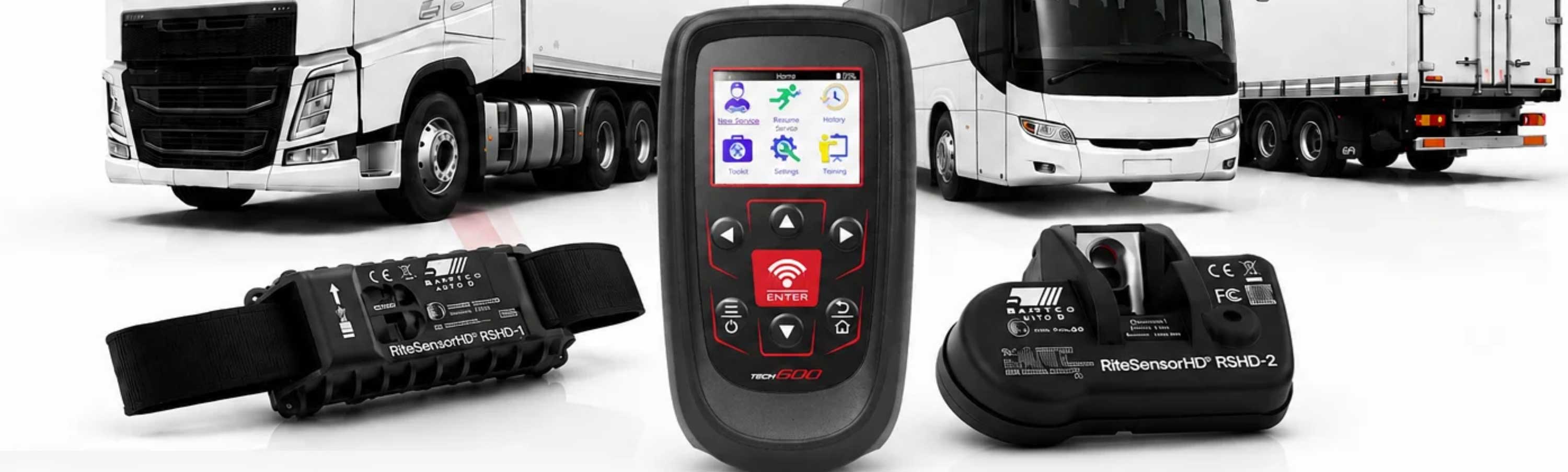
TPMS for commercial vehicles
Tyre pressure monitoring systems (TPMS) are now an essential component of modern commercial vehicles. Since July 2024, the UNECE R141 regulation has mandated the use of these systems for newly registered trucks, buses, and trailers.
For workshops and transport companies, this means that tyre pressure monitoring systems (TPMS) are now part of everyday business. A correctly functioning system increases road safety, reduces tyre punctures, and extends tyre life. At the same time, fuel consumption and operating costs can be significantly reduced through optimal tyre pressure.
How does TPMS work in commercial vehicles?
Each wheel contains sensors that continuously monitor tyre pressure and tyre temperature.
Each sensor has a unique identification number and is linked to the vehicle. This allows the system to clearly assign the recorded values to the respective wheel position and directly attribute pressure losses or temperature deviations to the affected tyre.
The data recorded by the sensor is transmitted to the display in the driver's cab in real time. In the event of a pressure loss or a critical temperature development, the driver is automatically informed by a warning message.
The challenge in everyday life
When wheel positions are swapped or wheels are replaced, the current configuration on the vehicle often no longer matches the sensor data stored in the control unit. As a result, the system reports an error, and the sensors must be recalibrated to the vehicle. This process is often time-consuming, as it requires special service equipment or apps. Additional software limitations can further complicate the service.
The ideal solution for your workshop is the use of a dedicated service unit in combination with universal sensors. This allows you to quickly change or replace wheels, including the sensors, on your commercial vehicles. Labor, downtime, and potential errors are significantly reduced.
Complete solution for your fleet
With your own service equipment and the use of universal sensors , you become independent and can perform the complete TPMS service quickly and directly in your workshop. At the same time, purchasing, warehousing, and availability are significantly simplified, saving time and reducing costs.
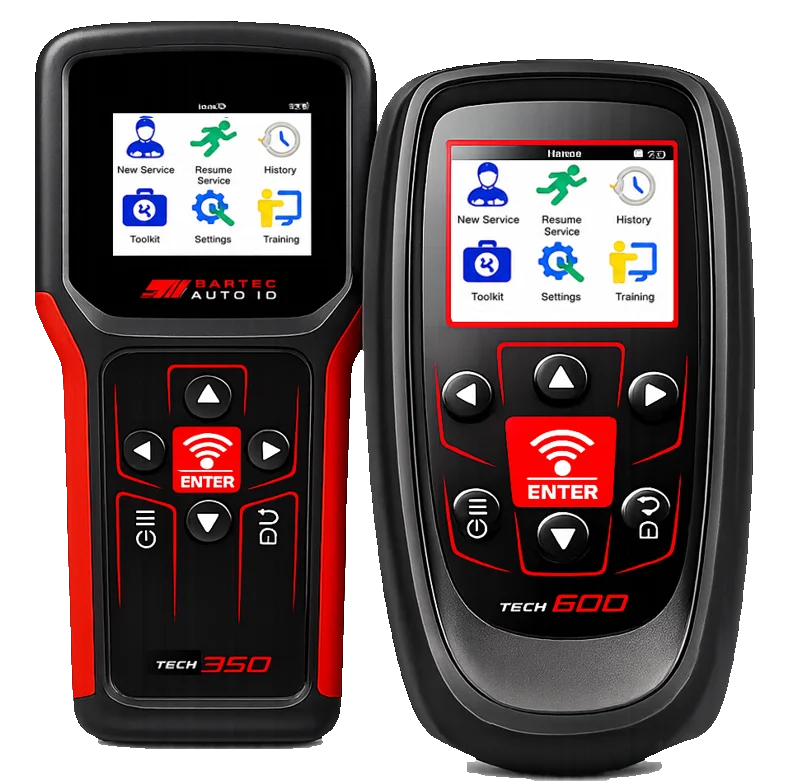
Select your service device
TECH350HD or TECH600HD – the choice is yours!
Both devices offer identical functionality and access to the same comprehensive database for motorcycles, cars, vans, trucks, trailers, and buses. Three years of software updates are also included.
The TECH350HD is the cost-effective entry-level solution for all daily TPMS work in the workshop.
The TECH600HD also offers a completely wireless workflow with Wi-Fi, Bluetooth, wireless OBD communication, and inductive charging technology. This makes it particularly suitable for professional users with high diagnostic volumes and fleet service.
Choose your Universal sensors
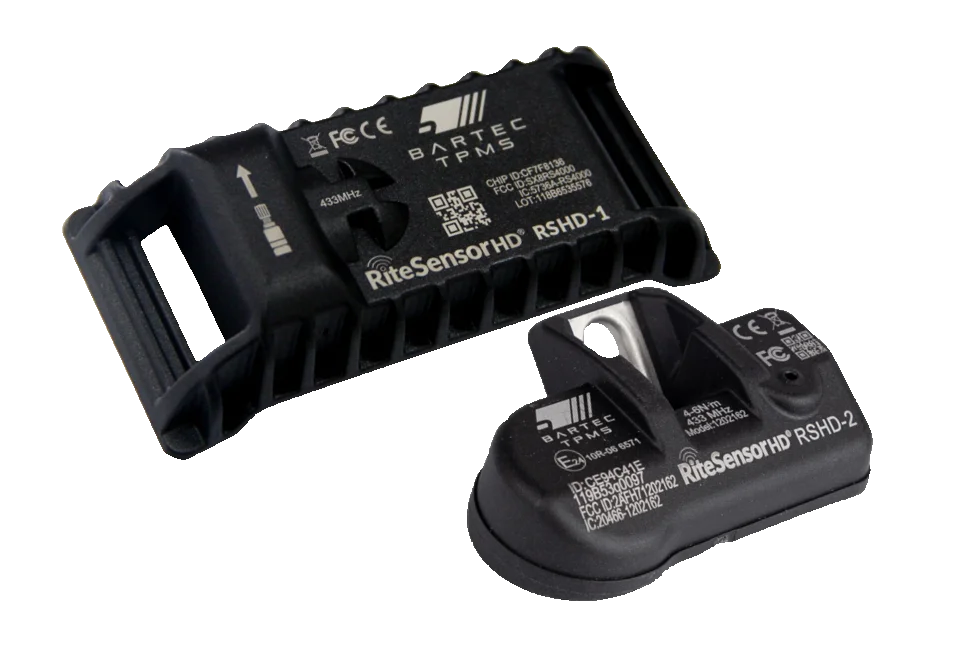
RSHD-1 and RSHD-2: both universal sensors are freely programmable and can be overwritten without limit for commercial vehicles. The difference lies in the mounting method:
RSHD-1: Universal sensor for mounting on the rim:
Ideal for trailers, semi-trailers and vehicles with rim sizes from 17.5″ to 22.5″.
RSHD-2: Universal sensor for mounting on the valve:
Ideal for tractors and buses where the sensor is attached directly to the valve.
In practice
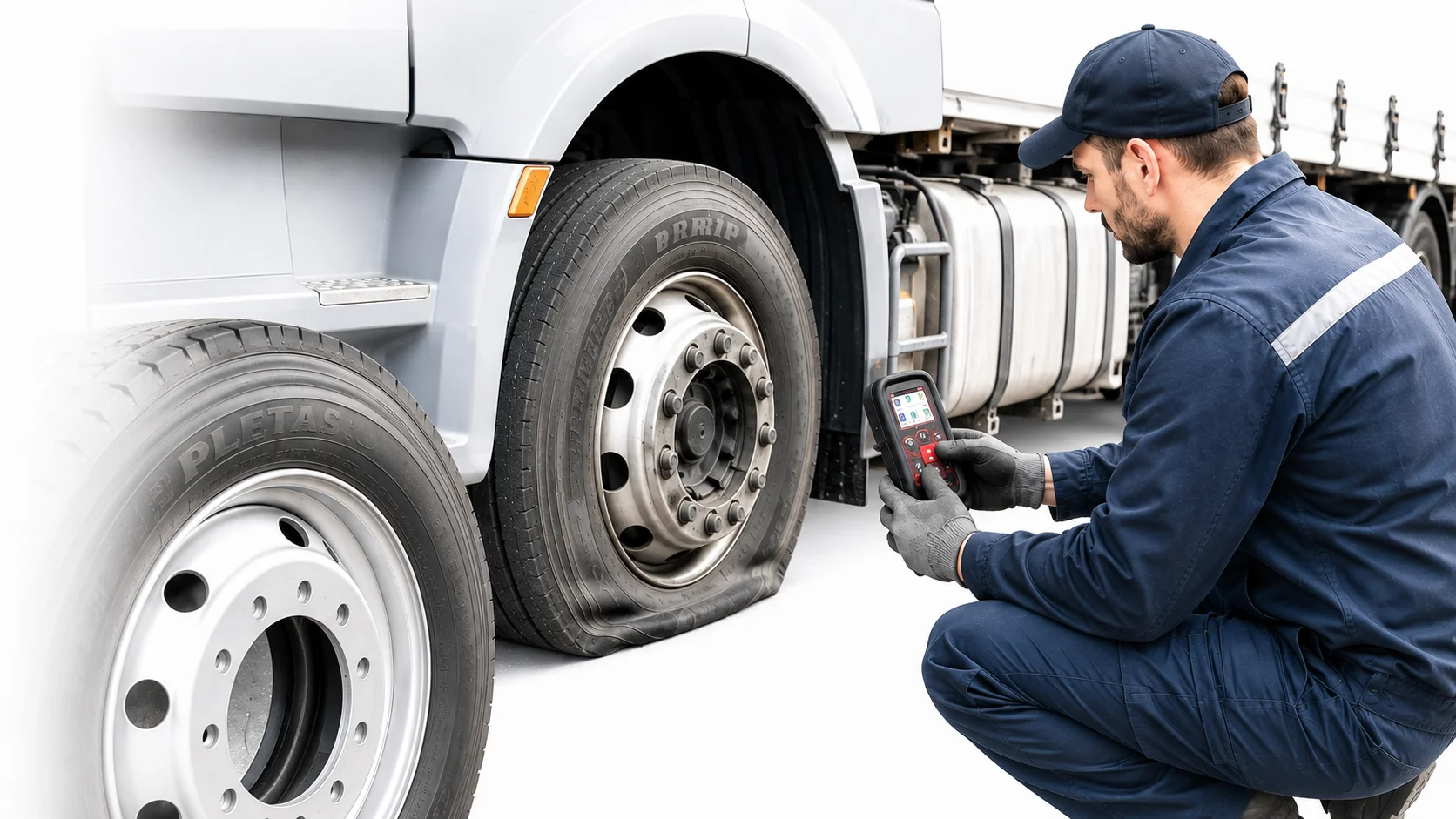
If you have chosen the TECH600HD TPMS service unit and the matching universal sensors, then you have a flexible and future-proof complete solution for your commercial vehicles.
Whether truck, bus or trailer – with this combination you can quickly program, clone, manage and easily replace sensors if necessary.
If a wheel needs to be replaced or changed, simply select the corresponding vehicle in the TECH600HD and clone the existing sensor to a universal sensor. The original sensor ID will be transferred to the new sensor within seconds.
Next, mount the wheel in the same position as the original wheel. Since the sensor ID remains unchanged, the vehicle will recognize the sensor immediately. No relearning or additional programming of the vehicle is required.
This saves valuable working time in the workshop, reduces downtime, and enables quick wheel changes. The vehicle is immediately ready for use again and can be put back into service without any further measures.